
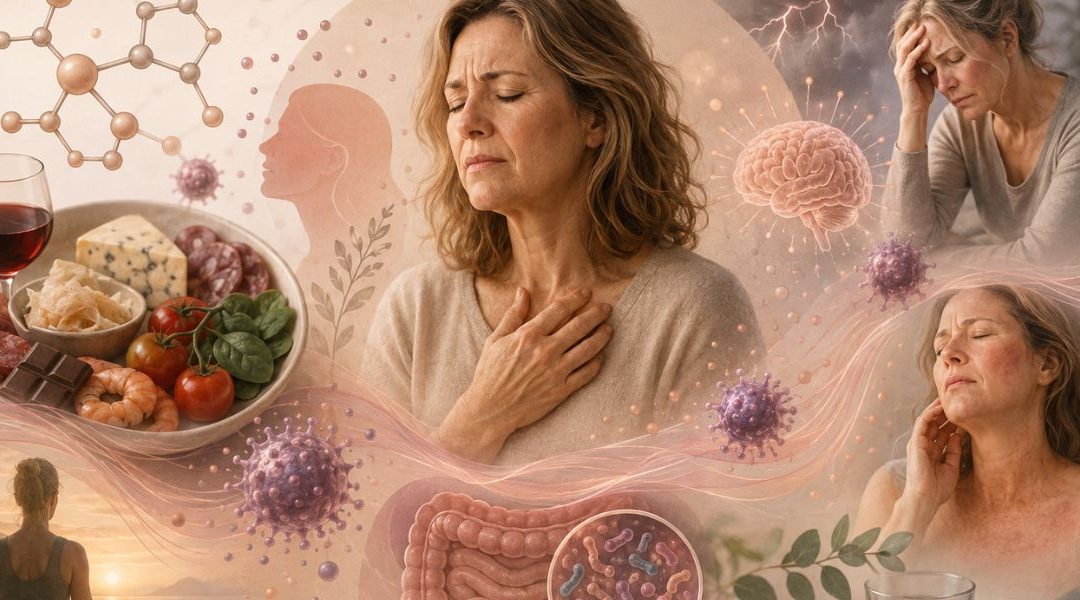
The Hidden Link Between Histamine, Hormones & Menopause
Why do foods you’ve always enjoyed now make you feel itchy, anxious, flushed, congested, or tired? Your hormones could be playing a big role.
Have You Suddenly Become “Sensitive” to Everything?
For years you happily enjoyed a glass of red wine. Tomatoes were never a problem. Chocolate was your comfort food. Strong perfume never bothered you. Then somewhere in your forties…
Suddenly your skin starts itching…
Your nose blocks for no obvious reason. You wake with pounding headaches. Your heart races after dinner. Wine gives you hot flushes. You feel anxious for absolutely no reason. And everyone tells you it’s allergies. But your allergy tests come back normal. Sound familiar?
Around the world, researchers and menopause specialists are paying increasing attention to something many women have never heard of: Histamine intolerance. And surprisingly…
One of the main reasons this can happen suddenly is that your hormones are changing.
Wait… Isn’t Histamine Just About Allergies?
You may think histamine is only released during allergic reactions. In reality, histamine is a natural chemical messenger your body makes every day. It plays important roles in your immune system, stomach acid production, digestion, brain function, sleep, body temperature, blood vessel regulation, and inflammation.
Histamine isn’t the enemy. The problem begins when your body produces more histamine than it can break down.
That’s when symptoms begin appearing throughout the body.
Why Does This Suddenly Happen During Perimenopause?
This is where hormones enter the picture.
For decades, estrogen and progesterone work together like two balancing partners. As menopause approaches, that balance becomes increasingly unpredictable. One month, estrogen may surge. The next month it may crash. Progesterone usually declines much earlier.
This changing relationship has a surprising effect on histamine.
Estrogen Can Increase Histamine
Research suggests that estrogen can prompt certain immune cells, called mast cells, to release more histamine. It may also influence the body’s sensitivity to histamine. This means that during times of estrogen fluctuation, many women become more reactive than they were previously.
Instead of experiencing only hot flushes… They begin noticing itching, skin rashes, flushing, headaches, sinus congestion, anxiety, dizziness, and heart palpitations
Progesterone Is Often the Calming Influence
Progesterone is frequently described as the body’s calming hormone. It supports the nervous system and may help stabilise mast cells, reducing the likelihood of excessive histamine release. As progesterone naturally declines during perimenopause, this calming influence can lessen.
For many women, that means the balance tips further toward histamine-related symptoms. This is one reason why symptoms often seem to worsen in the years leading up to menopause.
The Histamine Bucket
Imagine your body has a bucket. Every day, small amounts of histamine are added. Food. Stress. Environmental allergens. Alcohol. Poor sleep. Hormonal fluctuations. Gut health.
Normally, your body empties the bucket just as quickly. But during menopause…The bucket starts filling faster than it can drain. Eventually, one seemingly harmless trigger makes it overflow. Suddenly you react to foods you’ve eaten for decades.
The food isn’t necessarily the real problem. The overflowing bucket is.
Why Stress Makes Everything Worse
Many women notice that their symptoms flare up during stressful periods. That’s no coincidence. Stress increases cortisol and activates the body’s fight-or-flight response. This can stimulate mast cells to release even more histamine. Then histamine itself can increase feelings of anxiety, creating a frustrating cycle.
Stress increases histamine.
Histamine increases anxiety.
Anxiety increases stress.
Round and round it goes.
The Role of Your Gut
Your digestive system plays a surprisingly important role in controlling histamine. Certain gut bacteria naturally produce histamine. Others help regulate it. If the gut lining becomes irritated, or the balance of bacteria changes, the body may struggle to process histamine efficiently.
The enzyme primarily responsible for breaking down histamine from food is called DAO (Diamine Oxidase). Some people naturally produce less DAO. Others may temporarily have reduced DAO activity due to gut inflammation, nutrient deficiencies, or hormonal changes.
This doesn’t necessarily mean you’ve developed a lifelong condition. It simply means your body may need additional support as everything changes.
Common Histamine Symptoms Women Mistake for Menopause
Many of these symptoms overlap with menopause itself, making histamine easy to miss. You may experience:
- itchy skin
- unexplained hives
- flushing
- hot red ears or face
- blocked nose
- sinus congestion
- headaches or migraines
- dizziness
- heart palpitations
- anxiety
- panic attacks
- insomnia
- digestive bloating
- nausea
- food sensitivities
- worsening PMS
- irregular reactions to alcohol
Not every woman experiences every symptom. And not every menopause symptom is caused by histamine. But understanding the connection may explain why your symptoms fluctuate so dramatically from day to day.
Foods That May Trigger Symptoms
Everyone is different. Rather than fearing food, it’s more helpful to notice your own patterns. Some foods naturally contain more histamine or may encourage its release. These can include:
- aged cheeses
- cured meats
- smoked foods
- red wine
- champagne
- fermented foods
- vinegar
- tomatoes
- spinach
- avocado
- chocolate
- shellfish
This doesn’t mean you must avoid these foods forever.
Many women find they can enjoy these foods again once they address the underlying causes. This might involve supporting hormone balance, improving gut health, managing stress, or making other gentle lifestyle changes. For example, getting enough restful sleep, eating a range of gut-friendly foods, or doing calming activities like gentle exercise can help your body feel stronger.
Supporting Your Body Naturally
Histamine intolerance isn’t simply about eliminating foods. It’s about supporting the systems that maintain balance. Helpful lifestyle strategies include:
Prioritise restorative sleep
Sleep helps regulate both hormones and immune function.
Reduce chronic stress
Gentle breathing, walking, yoga and time outdoors can help calm the nervous system.
Support gut health
Eating a varied, fiber-rich diet and addressing digestive concerns with your healthcare practitioner may help support a healthier gut environment.
Stay hydrated
Adequate hydration supports normal body function, including circulation and temperature regulation.
Keep a symptom diary.
Patterns often emerge when you record:
- foods
- stress levels
- menstrual cycle (if applicable)
- sleep
- symptoms
Many women are surprised by the connections they discover.
Consider your hormones
If your symptoms have started along with other signs of perimenopause or menopause, it helps to look at the bigger hormonal picture instead of treating each symptom on its own. You might track your symptoms and cycles to spot patterns, or talk with a trusted healthcare provider about hormone testing and your concerns. These steps can help you better understand what’s happening in your body and get the support you need.
Where Does Youfemism Fit?
At Youfemism, we believe the body works as an interconnected system. When hormones fluctuate, they influence far more than hot flushes. They can affect inflammation, the nervous system, sleep, mood, digestion and even how your body responds to histamine.
Instead of focusing on each symptom separately, we aim to help women understand the hormonal changes happening and support their bodies during this important time of life.
For many women, restoring greater hormonal balance may be an important step in reducing the “histamine bucket” and helping the body feel calmer, more resilient, and more like itself again.
The Bottom Line
If you’ve recently found yourself reacting to foods, fragrances, or environmental triggers that never bothered you before…If your skin suddenly itches. If headaches seem to appear from nowhere. If anxiety feels different. If wine now causes flushing and heart palpitations.
It doesn’t necessarily mean you’ve developed dozens of new allergies. It may not simply be “getting older.” It could be another sign that your changing hormones are influencing your immune system in ways few ever explain.
Understanding this connection is often the first step to finding answers and feeling confident in your body again.
A Note from the Author
Menopause is showing us connections that many of us never learned about, and histamine is one of the most interesting. As research grows, we are committed to turning new science into clear, practical information that helps women make informed choices about their health.
If you would like the scientific references behind this article, we’d be delighted to send them to you. Get in touch, and we’ll email our reference list.