
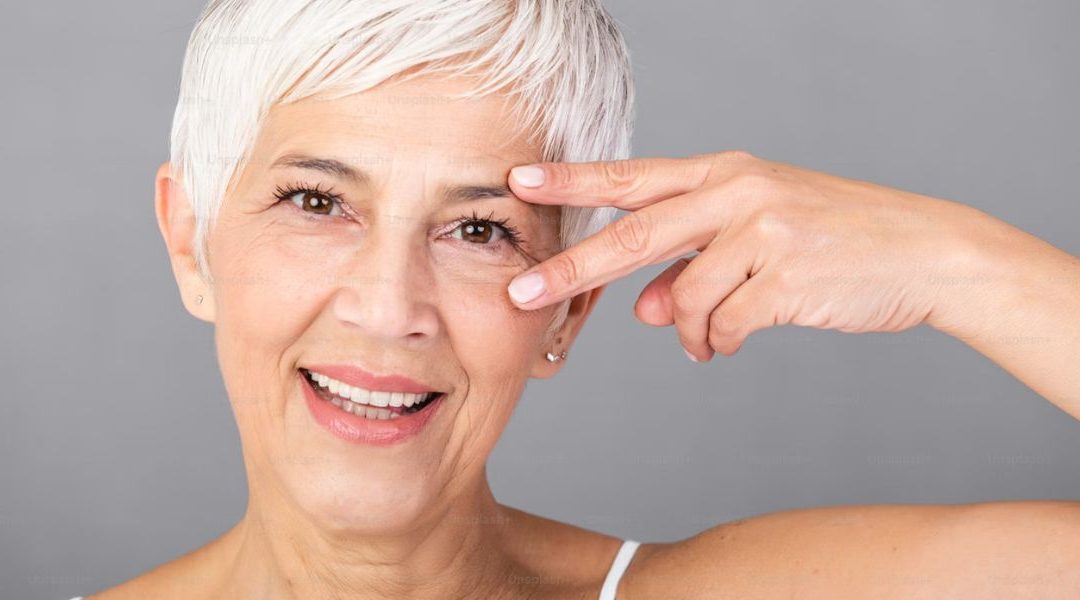
Your Skin Is Changing — Here’s What Your Hormones Are Telling You
Let’s be honest for a moment.
No one really wants to feel like they’re showing their age — not in a way that feels tired, dull, or unfamiliar. It’s not about chasing perfection. It’s about wanting your skin to look cared for, radiant, and still like you.
When your skin begins to change — sometimes quite quickly — it can feel unsettling. You might catch your reflection and wonder, “When did this change? Why does my skin look so different? Why aren’t my usual products working?”
Many women immediately question whether it’s their products, sun exposure, pollution, or diet. While all of these factors do play a role, there’s often a deeper, overlooked reason driving these changes.
Your hormones are the missing piece — especially at this stage.
Your Skin Has Always Been Hormonal
We often think about hormones only when symptoms become obvious, like hot flushes or mood changes. But your skin has been responding to your hormones since your teenage years.
Think back.
In your younger years, hormonal shifts may have shown up as breakouts, oiliness, or sensitivity. Later, your skin likely felt more balanced and predictable.
Now, as you enter this stage, those shifts begin to show up differently. Your skin may feel drier, thinner, less firm, and less responsive to what used to work.
These changes aren’t happening in isolation. They’re part of a lifelong hormonal story — one that is simply becoming more visible now.
The Shift That Changes Everything
As you move through perimenopause and into menopause, one hormone in particular begins to decline: estrogen.
This hormone plays a far bigger role in your skin than most realise. Estrogen supports collagen production (which keeps skin firm), moisture retention (which keeps it soft and plump), elasticity (that natural bounce), and circulation (your healthy glow).
When estrogen begins to drop, your skin loses part of its natural support system. This is when you may start noticing that your skin feels thinner, loses moisture more easily, fine lines become more visible, and that natural glow is harder to maintain.
It’s Not Just Now — It’s the Journey
Your skin today reflects not only what’s happening now, but also the journey it has been on over time.
The products you’ve used, your sun and environmental exposure, the food you’ve eaten, the stress you’ve carried, and the sleep you’ve had — or missed — all play a role.
As hormones shift, your skin becomes more sensitive to these past influences. That’s why changes can feel sudden, even though they’ve been building quietly over time.
Why Skincare Suddenly Stops Working
This is often the most frustrating part.
You try new products, upgrade your routine, and invest more time and money — yet your skin doesn’t respond the way it used to.
That’s because it’s no longer just about what you put on your skin. It’s about what’s happening within your body.
Hormones, stress, sleep, hydration, and nourishment all begin to play a much bigger role.
For example, when stress levels rise, cortisol can increase, accelerating skin ageing and affecting collagen. When sleep is disrupted, your skin has less time to repair and restore itself.
So even if your skincare routine is “perfect,” your skin may still be asking for something more.
Can You Reverse It?
This is a question many women quietly ask.
The honest answer is that you may not be able to reverse everything completely. However, you can absolutely support your skin to look healthier, softer, and more cared for.
And often, that’s what truly matters — not looking younger in an unrealistic way, but looking well, nourished, and vibrant in your own skin.
A Gentler Way to Care for Your Skin
At this stage, your skin often responds better to simplicity, nourishment, and gentleness.
Many women find that moving away from harsh, overly complicated routines makes a noticeable difference. Natural oils, for example, can be incredibly supportive — coconut oil for hydration, avocado oil for nourishment, almond oil for softness, and castor oil for deeper conditioning.
These are not just alternatives; they are deeply nourishing in a way your skin recognises.
Essential oils can also play a role, not only for your skin but for how you feel. When your body feels calmer, your skin often reflects that too.
Supporting Your Skin from Within
Supporting your skin from within empowers you to see the connection between your overall health, hormones, stress, sleep, and nourishment.
Your skin is not separate from your body — it reflects what’s happening inside.
This is where the shift happens. Skincare becomes less about chasing products and more about supporting your body as a whole.
If you’d like to understand how plant-based ingredients support hormonal balance during this stage, you can explore more here.
You Can Still Feel Confident in Your Skin
This stage of life is not about losing something. It’s about learning your body in a new way.
Your skin may be changing, but it can still feel cared for, supported, and naturally radiant.
And perhaps most importantly, it can still feel like yours.
💛 Final Thought
Your skin tells the story of your life — and your hormones are part of that story.
When you begin to support your body with more understanding and gentleness, that care begins to show in ways that feel real and beautifully yours.