
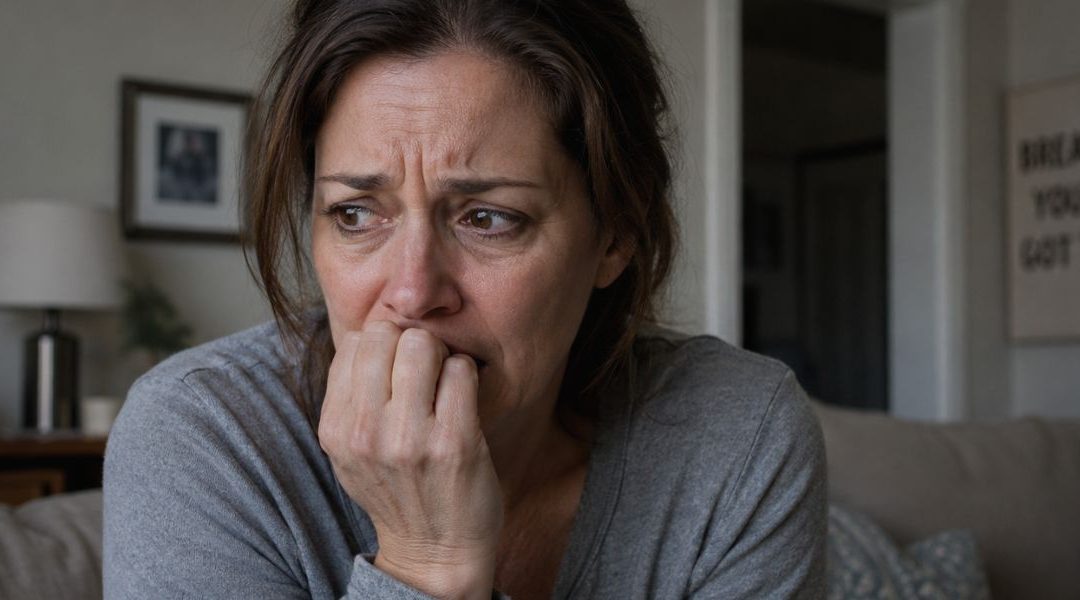
Many women describe similar experiences. You might suddenly feel more anxious, emotional, overwhelmed, or reactive than you used to. Sometimes, these feelings appear without any obvious cause.
You might find yourself overthinking, feeling more emotionally sensitive, waking up with a racing heart, or struggling to manage daily stress. It’s common to feel on edge and quietly ask, “What is happening to me?”
If this feels familiar, please know this first: You are not “going crazy.” You are not weak. And you are not alone. For many women, anxiety during perimenopause doesn’t feel like regular stress. Hormones often have a big impact on these changes.
“Why Am I Suddenly So Anxious?”
Many women ask this question during perimenopause, even if they never had anxiety before, felt emotionally strong, or usually handled stress well.
Suddenly, even small things can feel overwhelming. Your ability to handle stress may seem lower, and it might feel like your nervous system is always on high alert.
You might not realise that hormones can affect how you manage your emotions. Because of this, it’s easy to blame yourself.
The Shift That Changes Everything
As you move through perimenopause and into menopause, one hormone in particular begins to decline: estrogen. This hormone plays a far bigger role in your skin than most realise. Estrogen supports collagen production (which keeps skin firm), moisture retention (which keeps it soft and plump), elasticity (that natural bounce), and circulation (your healthy glow).
When estrogen begins to drop, your skin loses part of its natural support system. This is when you may start noticing that your skin feels thinner, loses moisture more easily, fine lines become more visible, and that natural glow is harder to maintain.
This Is One of the Most Overlooked Symptoms of Perimenopause
When people talk about menopause, they often mention hot flushes, night sweats, or irregular periods. But many women notice emotional and mental symptoms much earlier, such as anxiety, panic, feeling overwhelmed, irritability, brain fog, and lower stress tolerance.
Since these symptoms don’t always seem connected to hormones, many women spend years feeling confused about what’s going on.
The Hormones Behind Midlife Anxiety
Several hormones affect mood, calmness, emotional resilience, and nervous system function. When these hormones change, the nervous system can react in a big way.
Progesterone
Progesterone is sometimes called the body’s calming hormone. It helps with relaxation, emotional balance, good sleep, and the maintenance of a calm nervous system.
When progesterone levels drop during perimenopause, women may feel more anxious, less able to handle stress, and more emotionally sensitive.
👉 Learn more about progesterone and emotional balance
Estrogen
Estrogen also influences mood, serotonin, thinking, and emotional stability. When estrogen levels change, it can cause mood swings, unpredictable emotions, and anxiety.
Why Your Nervous System Feels More Sensitive During Perimenopause
This is important to know. Perimenopause is not just about hormone changes. It often affects the nervous system as well. Many women in midlife already deal with work stress, emotional labor, caregiving, sleep problems, and ongoing mental overload.
When hormone changes add to all this stress, your nervous system can become even more sensitive. This is why many women suddenly feel overstimulated, emotionally exhausted, or unable to relax.
Anxiety in Perimenopause Doesn’t Always Look Like Panic
This is another reason perimenopause can be confusing. Anxiety during this time can show up as racing thoughts, overthinking, irritability, dread, emotional sensitivity, waking up tense, or feeling overwhelmed.
This can happen even if you’ve never had a panic attack before. Many women simply say, “I don’t feel like myself anymore.”
The Sleep, Stress, and Cortisol Connection
Not getting enough sleep can make everything feel more intense. If you wake up a lot or sleep lightly, your nervous system has a harder time recovering.
👉 understand how hormone changes affect sleep
Then there’s cortisol, the stress hormone. When cortisol stays high for too long, many women notice racing thoughts, tense muscles, emotional exhaustion, and more anxiety.
👉 Learn how cortisol affects the body during midlife
That’s why anxiety in midlife often feels both physical and emotional at once.
Why Women Often Blame Themselves
This can be one of the hardest parts. Many women quietly think, “I should cope better,” “Why am I so emotional?” and “Why can’t I handle stress anymore?”
But this isn’t a weakness. Your body is going through big hormonal and nervous system changes. Knowing this can often bring real relief.
Gentle Ways to Support Your Nervous System and Hormones
This stage isn’t about fixing yourself. It’s about finding new ways to support your body right now.
Prioritise Rest and Recovery
Sleep is more important than many women realize. Even small changes can help your nervous system recover.
Reduce Nervous System Overload
Your body might need slower evenings, more quiet time, less stimulation, or kinder expectations.
Support Hormonal Balance Naturally
Plant-based ingredients that have helped women through hormone changes in the past may help your body feel calmer and more balanced now, too.
Ingredients like Chasteberry, Wild Yam, Black Cohosh, Dong Quai, and Motherwort have long been used to support emotional balance and natural hormonal well-being.
👉 explore the ingredients and benefits here
Speak to Yourself More Gently
This is very important. You are not failing. Your nervous system needs support and kindness, not self-criticism.
You Are Not Losing Yourself
This may be the most important thing to remember: You are not “too emotional,” “too weak,” or losing your mind. Your body is going through a transition that many women were never really prepared for. When you start to support yourself with more understanding, calm, and compassion, Things often begin to feel steadier again.
Final Thought
Perimenopause anxiety is not “all in your head.” Most of the time, it’s part of a bigger process involving your hormones and nervous system. When you notice these changes and respond with more gentleness and support, your body often becomes calmer, more balanced, and more resilient.